Villanovia
Villanovia
Podere Batazzone,
Loc. Mazzolla, Volterra (PI)
info and Booking
villanovia@villanovia.it
+39 328 3056058
CIN: IT050039B5HIZHEW4Y
The ideal location to immerse yourself in a relaxing holiday and unique experiences.
Our rooms,
each with a story to tell
The property can accommodate group stays, corporate meetings or family celebrations; whatever the occasion, it can welcome 20+ guests, offering a high-quality solution.
At ground floor three apartments with independent entrances.
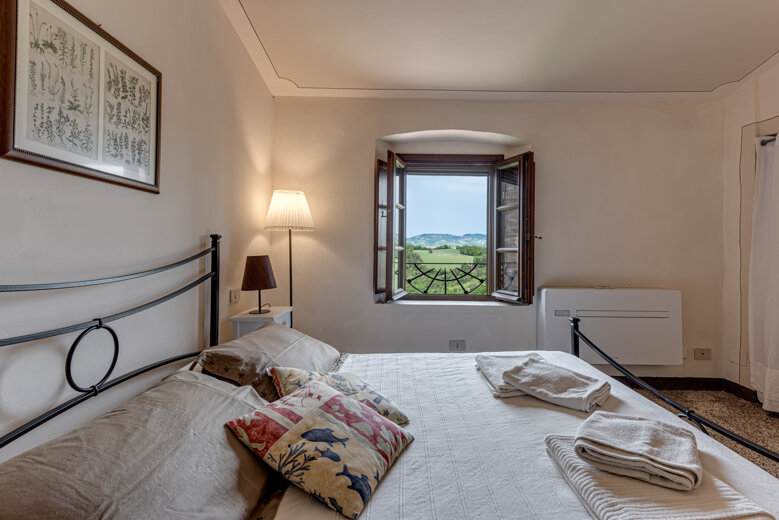
At first floor six units with private bathrooms and a panoramic terrace overlooking Volterra.
All accommodations are spacious, air-conditioned, and feature dedicated en-suite bathrooms, a key logistical advantage for large gatherings.
The original 170 sqm stone living room provides an elegant gathering space.
A professional kitchen and an extensive outdoor BBQ area cater perfectly to large-scale catering or group dining needs.
A reliable 100 Mb WiFi system supports virtual offices and high-demand connectivity.
ROOMS AND APARTMENTS
GROUND FLOOR
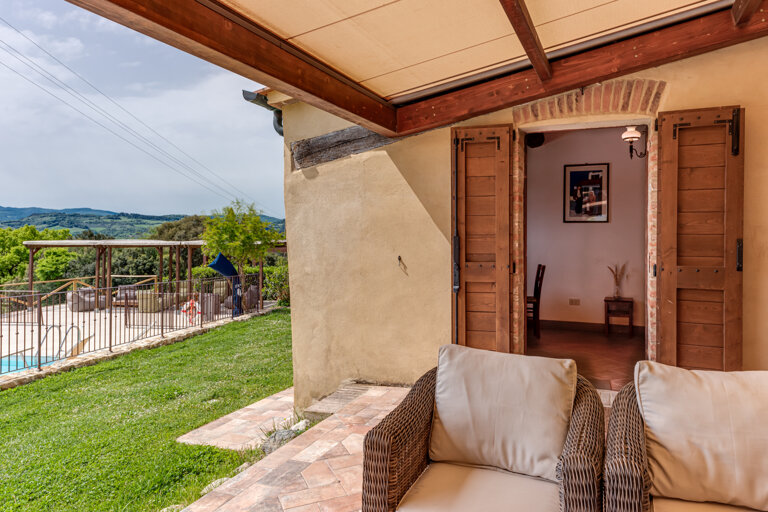
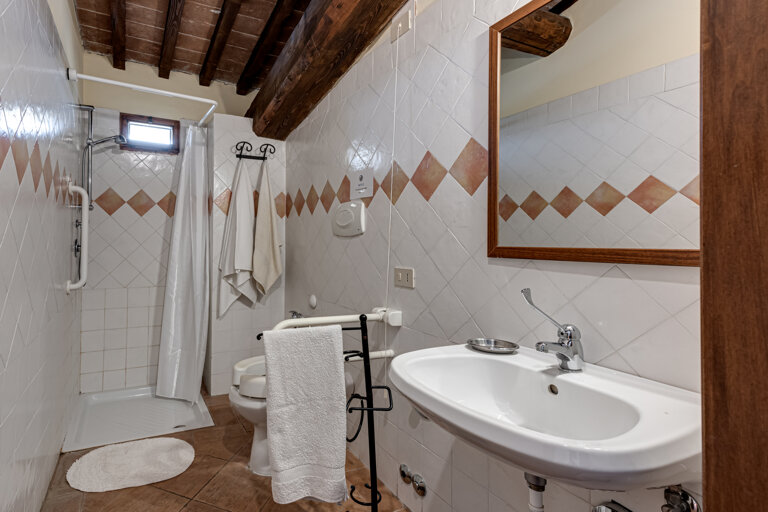
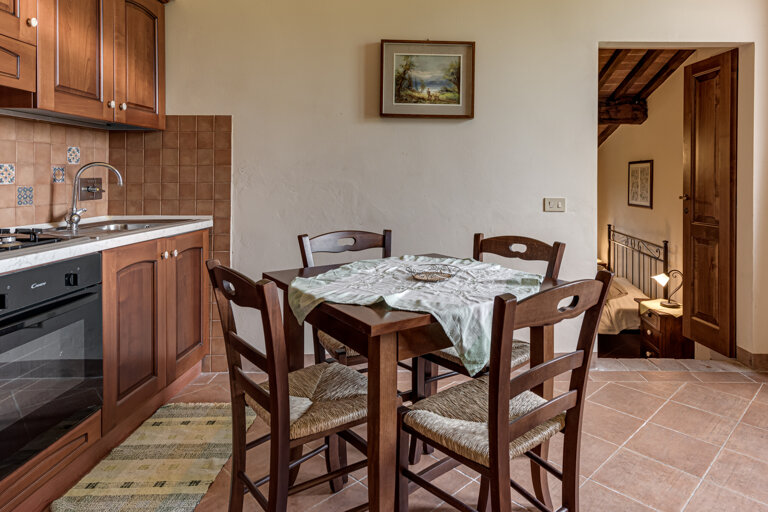
Carraia
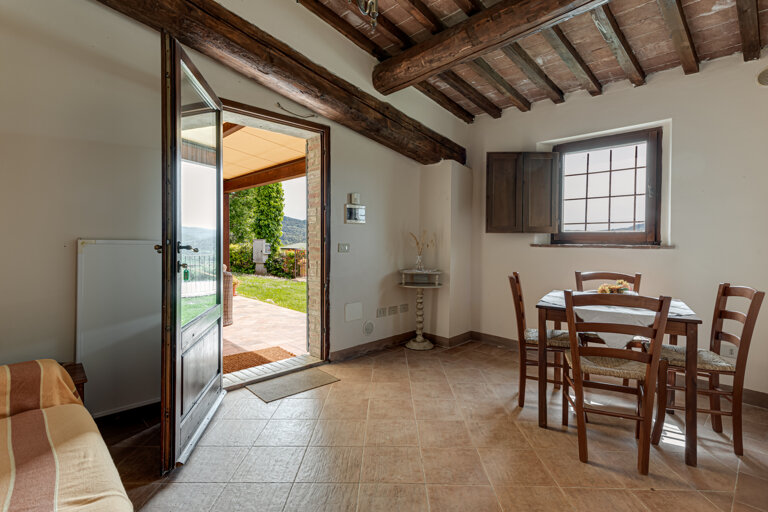
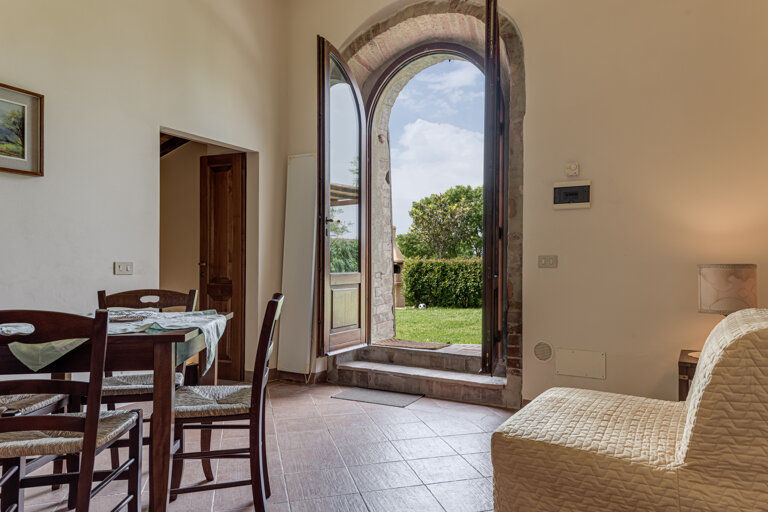
Apartment with twin bedroom, living room with double sofa-bed,
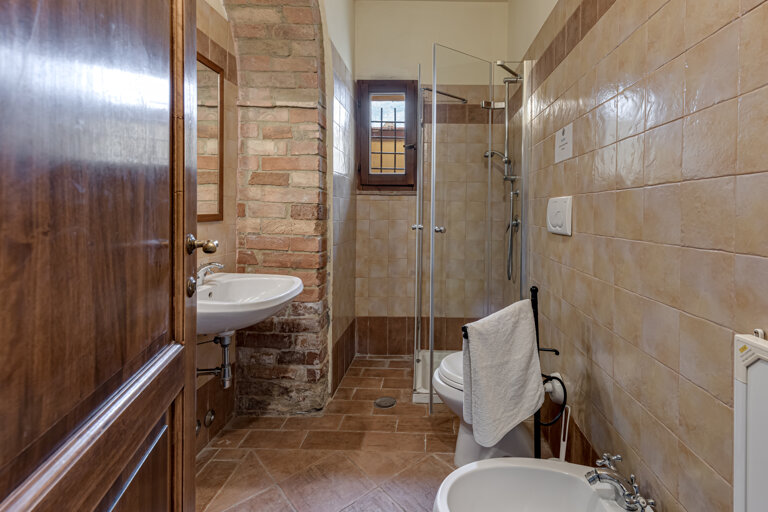
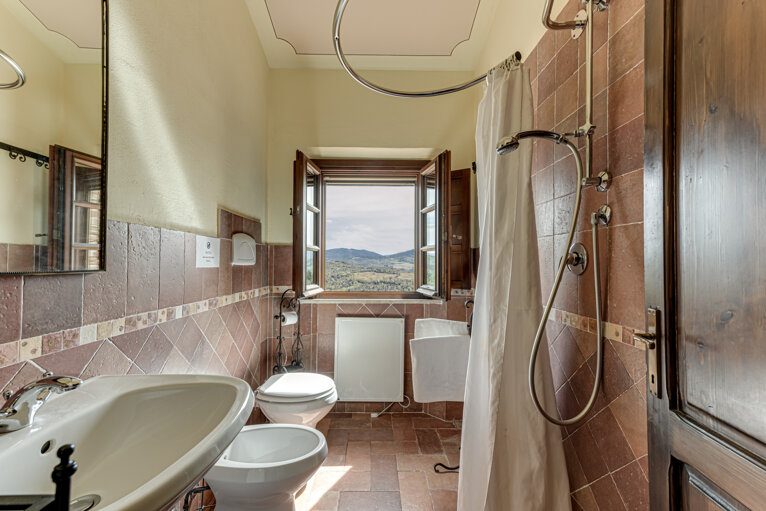
private shower bathroom (suitable for people with disability).
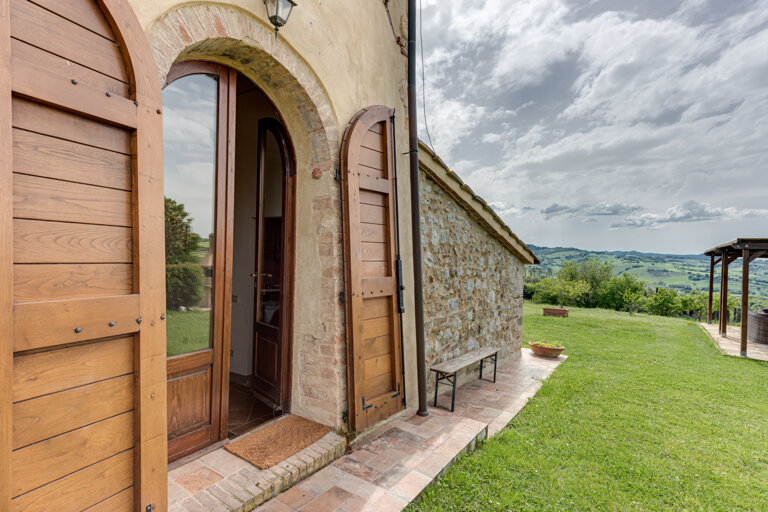
Indipendent entrance from the garden.
In the 16th century, CARRARIA was the name given to the road used by carts. Before the renovation, an old cart with forged iron steam tractor wheels was found here (now on display at the main gate). It is believed that it was used to transport goods, pulled by animals, and that the iron wheels were most likely salvaged by farmers, who reused everything (without waste!).
GROUND FLOOR
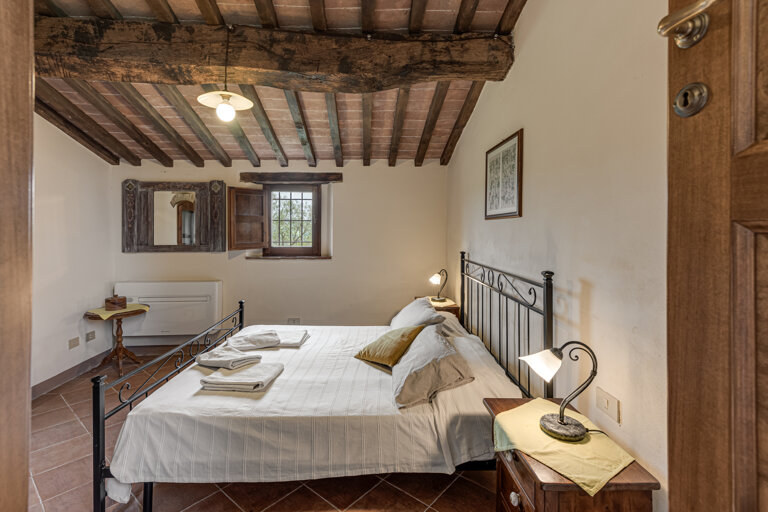
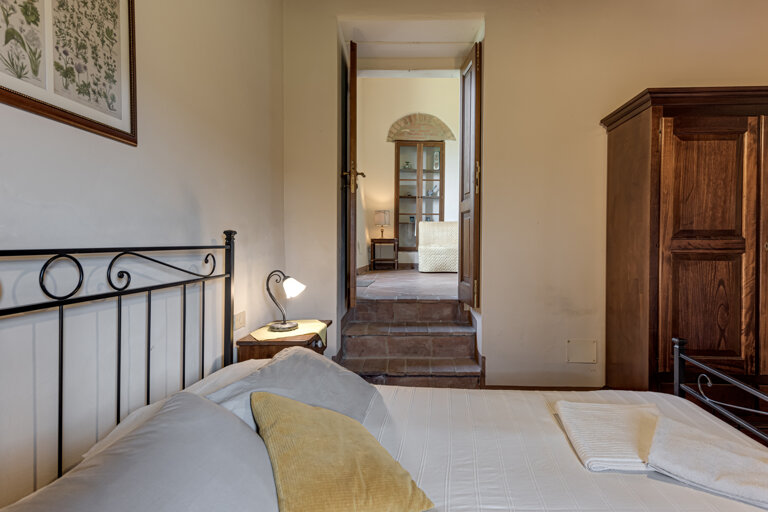
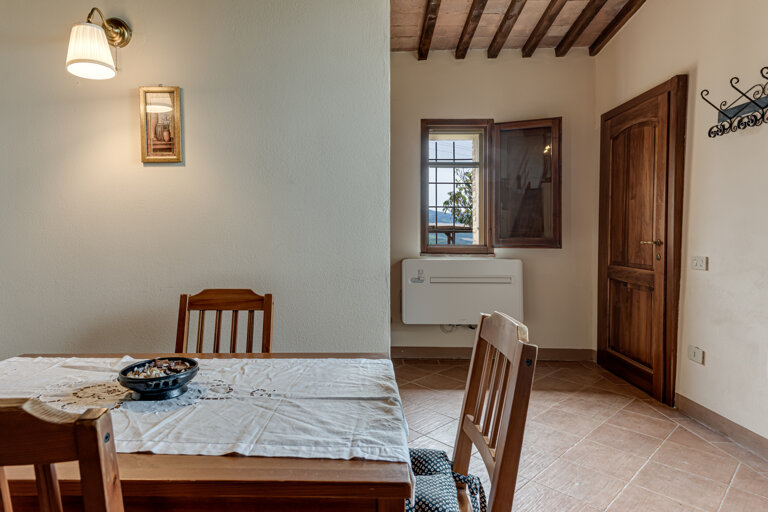
Volterrana
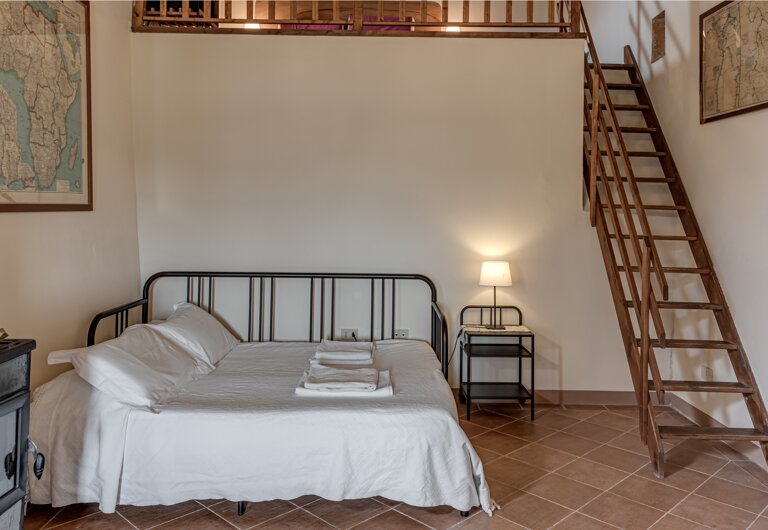
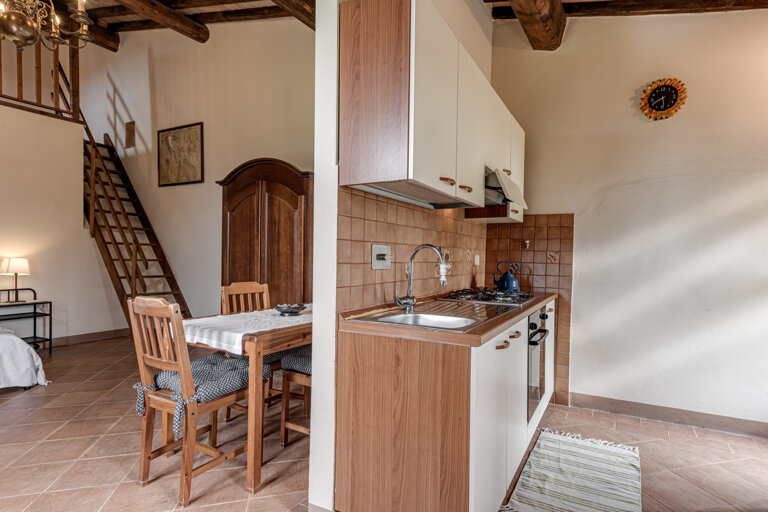
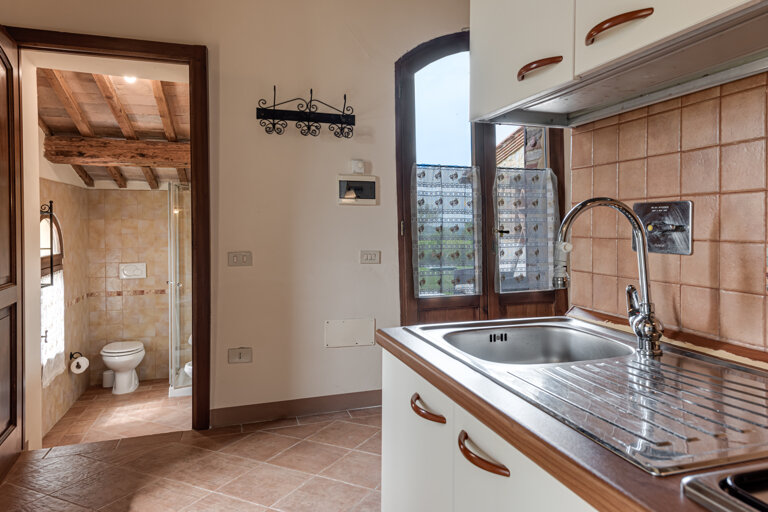
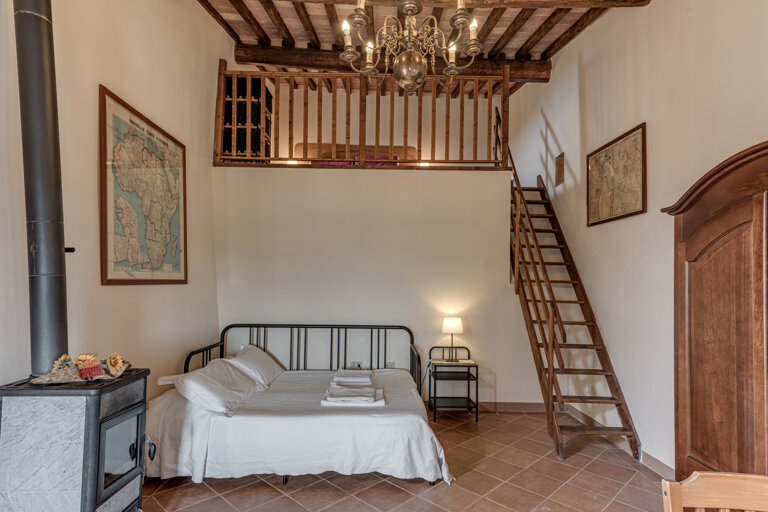
Apartment with bedroom,
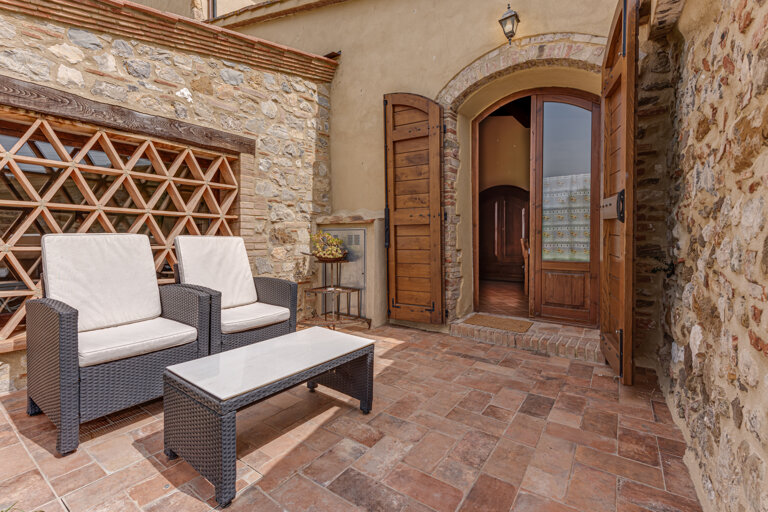
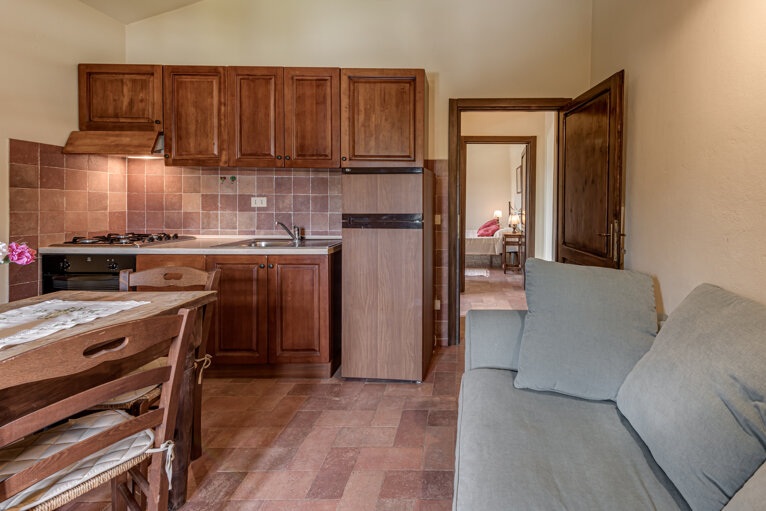
living (sofa-bed x 1) with kitchen. private shower bathroom. Independent entrance, from the garden.
This room has a vaulted entrance, typical of buildings in Volterra and Tuscany in general. From its door, you can see the city of Volterra directly opposite, with the hills and the winding road that cuts through the hilly landscape. Volterrana is the name used for the road that connects Siena to Pisa, passing through Volterra, which in ancient times was a large area of cultural influence for the city of Volterra.
GROUND FLOOR
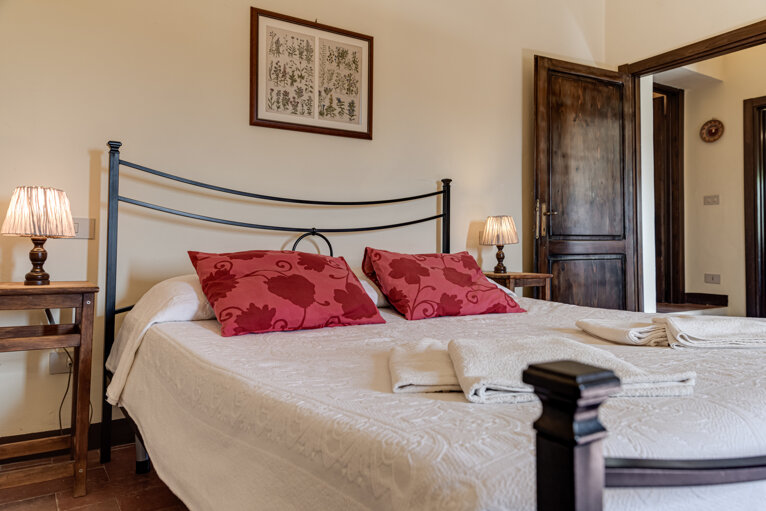
Mugnaia
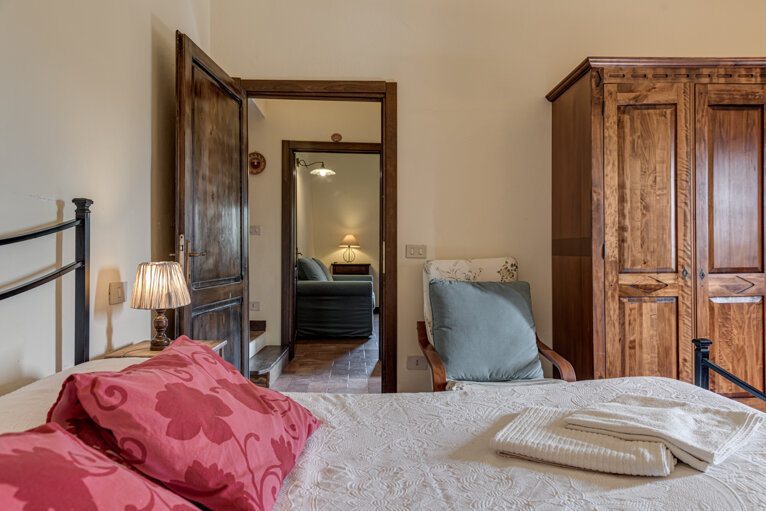
Double-bed accomodation,
living with kitchenette (sofa-bed x 2), private shower bathroom.
Indipendent entrance from the garden.
Originally a grain storehouse. Its location overlooks the Cecina river valley, which was already used in the Middle Ages for grinding flour. At the confluence with the Pavone stream, near Masso degli Specchi, a medieval ‘weir’ is still visible, built in masonry and supported by wooden beams, which was once used to convey water through a system of channels to the Berignone Mill. The room, as in its original form, has a small loft accessible via a typical mill staircase, now equipped with two single beds for children.
FIRST FLOOR
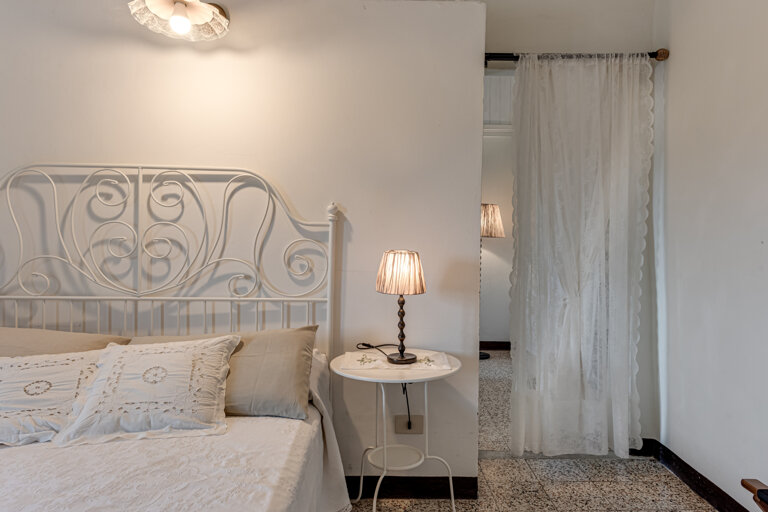
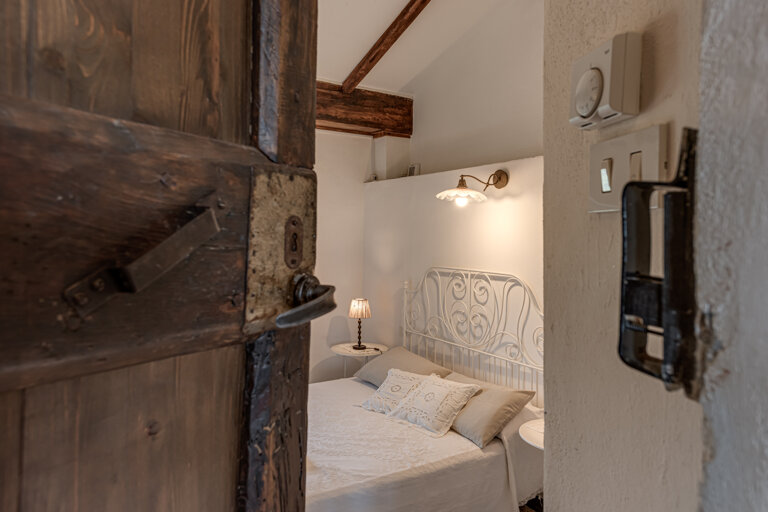
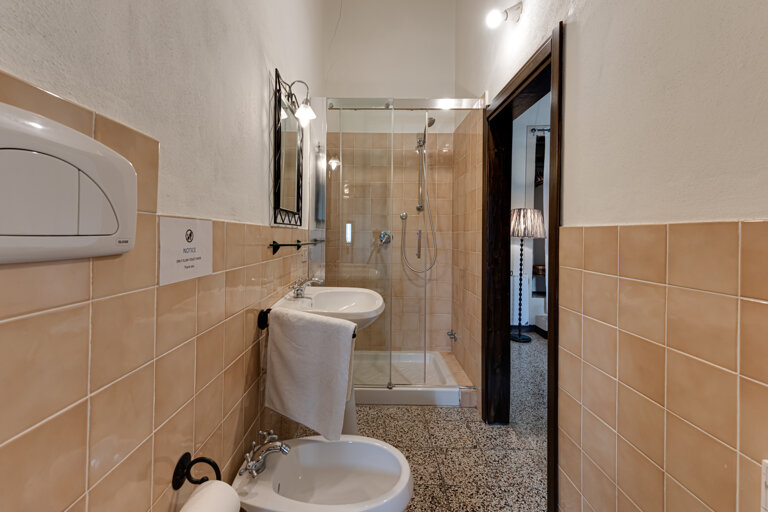
Oliva
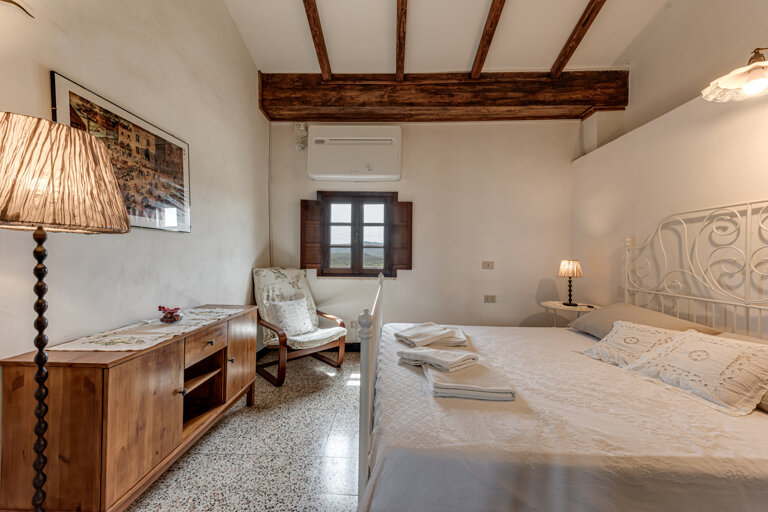
Apartment with double-bedroom, living with kitchennette and double sofa-bed,
private shower bathroom.
The name of this room pays homage to the fruit of the most important and ancient tree in the Tuscan countryside, the olive tree. On one side, facing north, the room overlooks the farmyard, once the centre of rural life, where the olive harvest was gathered before being taken to the mill. From the other room, you can see the old and new olive groves used for the production of extra-virgin olive oil, a symbol of prosperity, peace and wealth, also known as “green gold”.
FIRST FLOOR
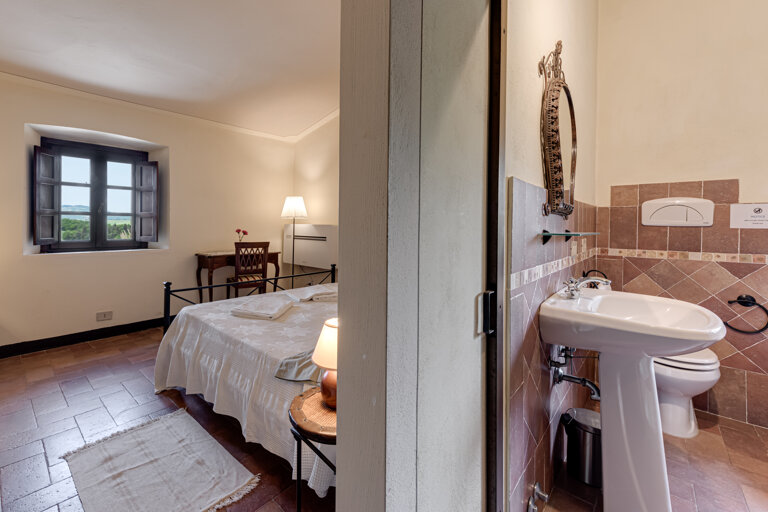
Melograno
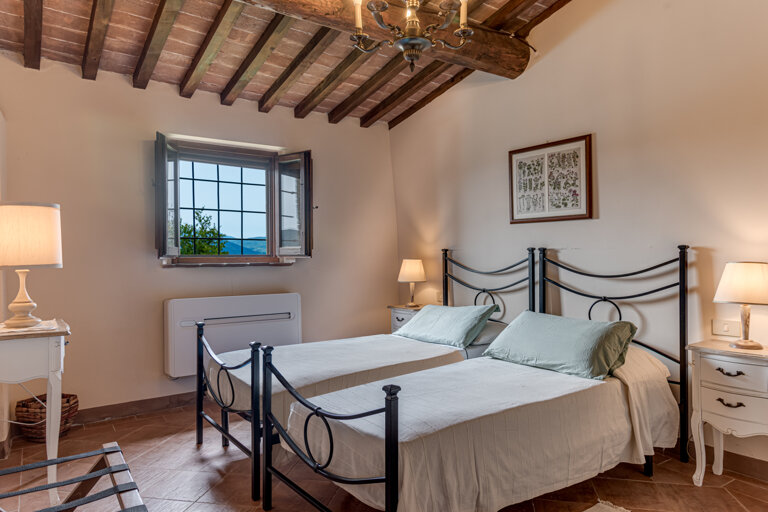
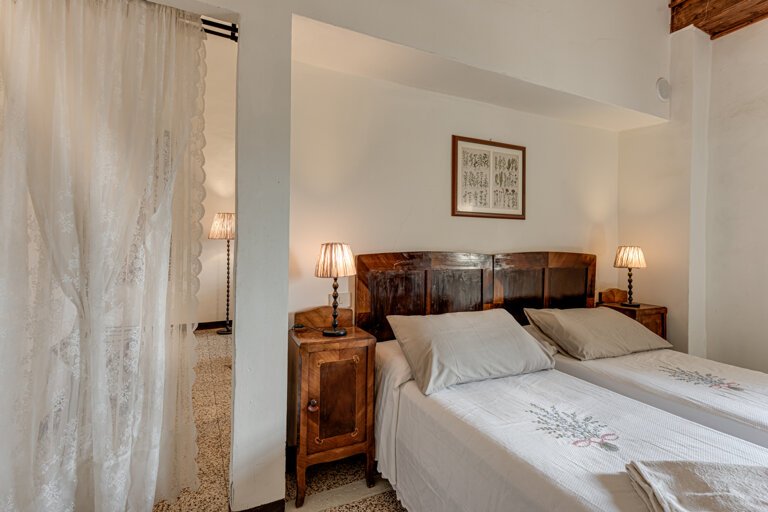
Apartments with two bedrooms
(twin-beds and double-bed),
private shower bathroom.
A fruit found since ancient times on the Mediterranean coast, it was spread by the Phoenicians, Greeks and Romans. It was present in every Mediterranean garden because it is a robust and resistant plant that, with little care, produces abundant fruit. The plant can live up to 100 years. In Renaissance painting, it is often depicted as a symbol of fertility due to the numerous seeds inside it. We have respected tradition with one at the entrance to the swimming pool, which the room overlooks.
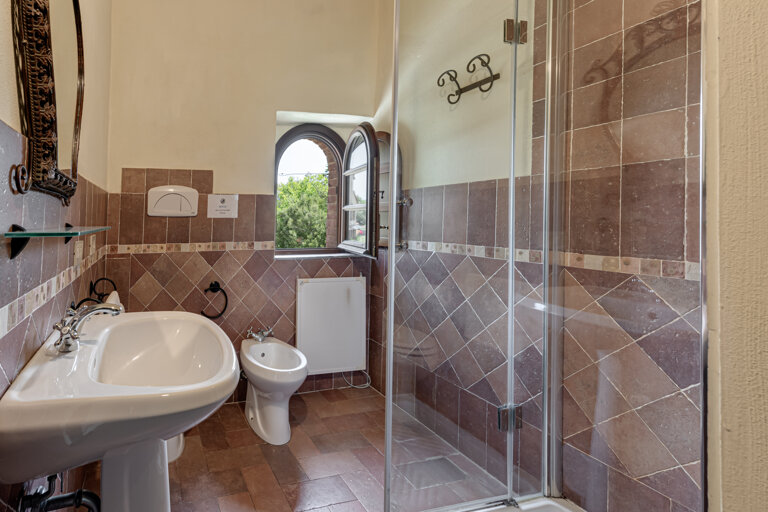
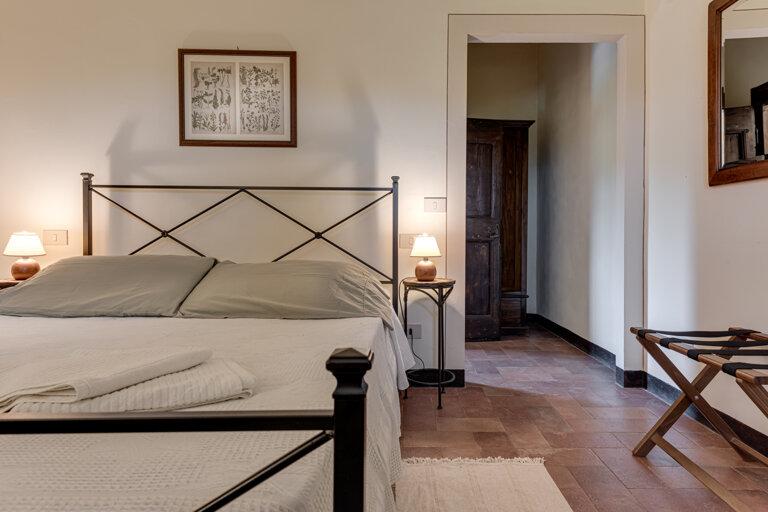
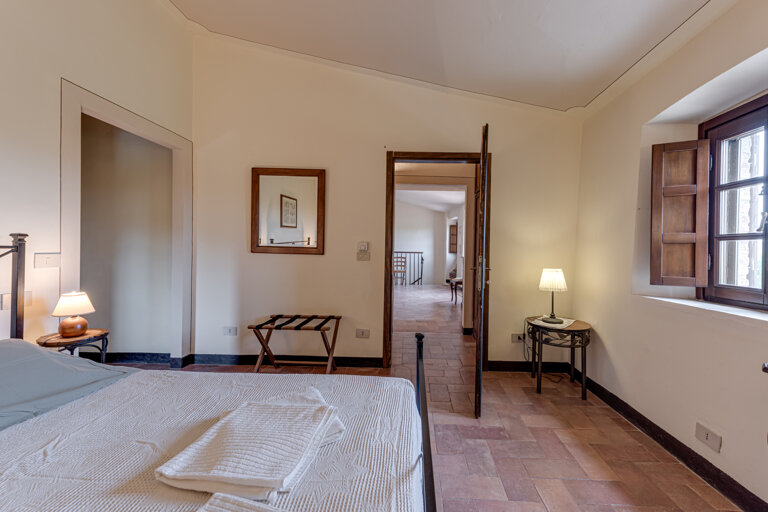
FIRST FLOOR
Melina
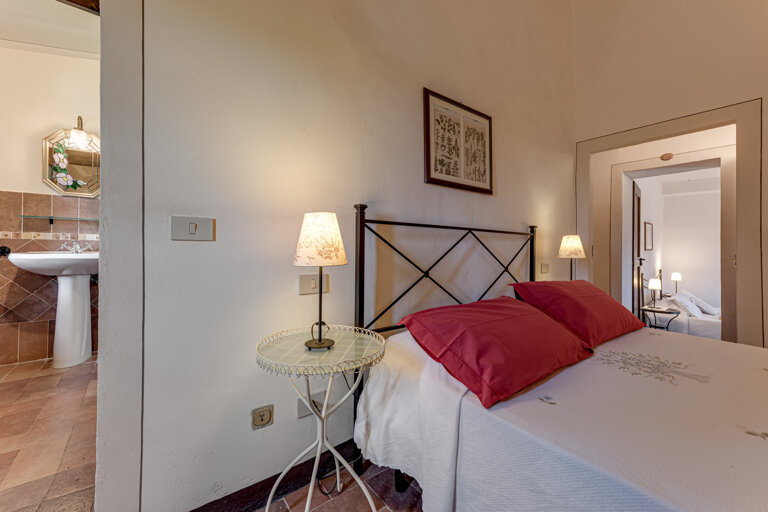
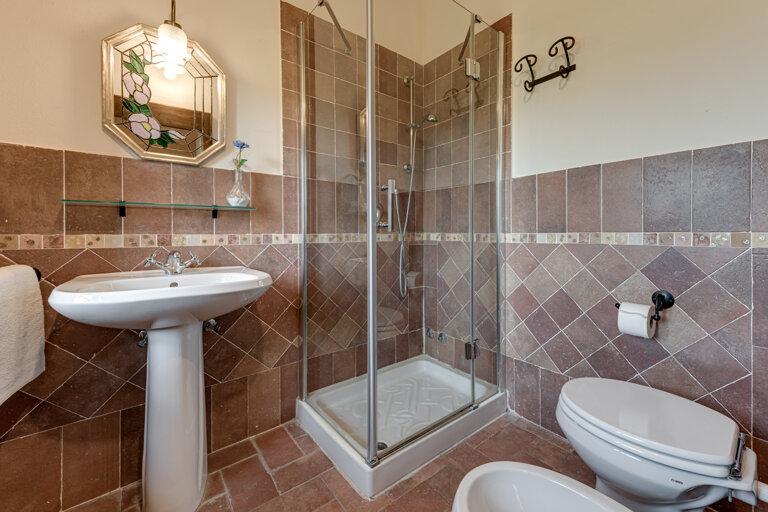
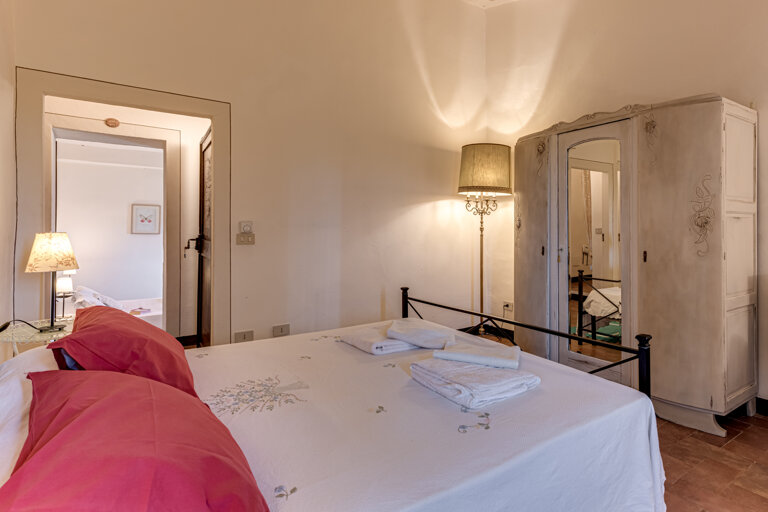
Double-bed rooms with private shower bathroom.
The first tree in sight is an ancient apple tree, of the “Francesca” variety, which grew wild along the Via Francigena, the road that connected Rome to Gaul (now France) in Roman times. It was well known during the Renaissance when it provided sustenance to pilgrims travelling along the road to Rome and Puglia, before embarking for the Holy Land. This tasty and long-lasting apple was so popular that until the 1960s it was the second most cultivated variety in Tuscany, before being replaced by modern cultivars with the advent of industrial fruit growing. Few trees remain as evidence of this fruit, but it seems to be gradually coming back into use.
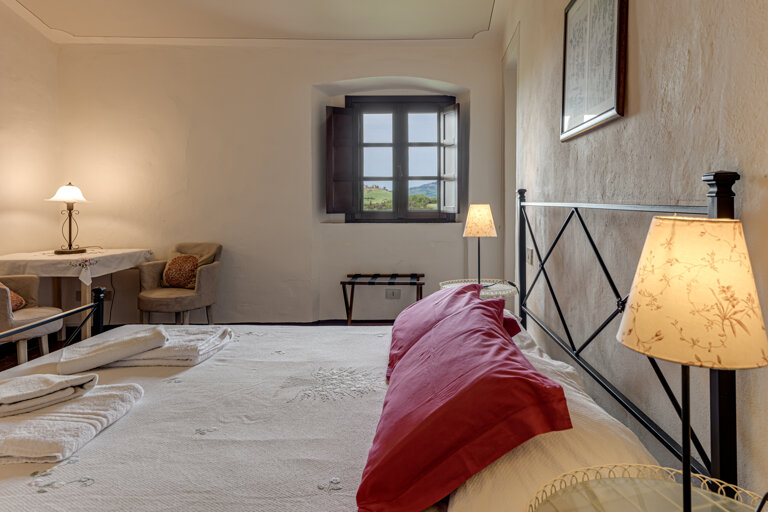
FIRST FLOOR
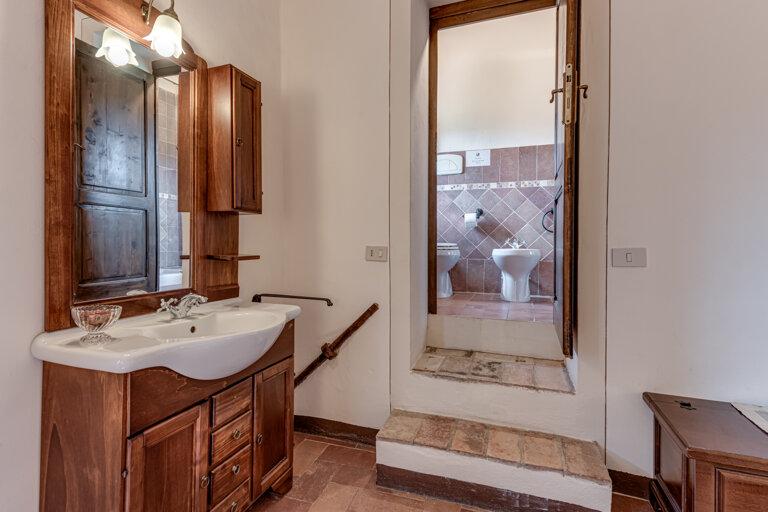
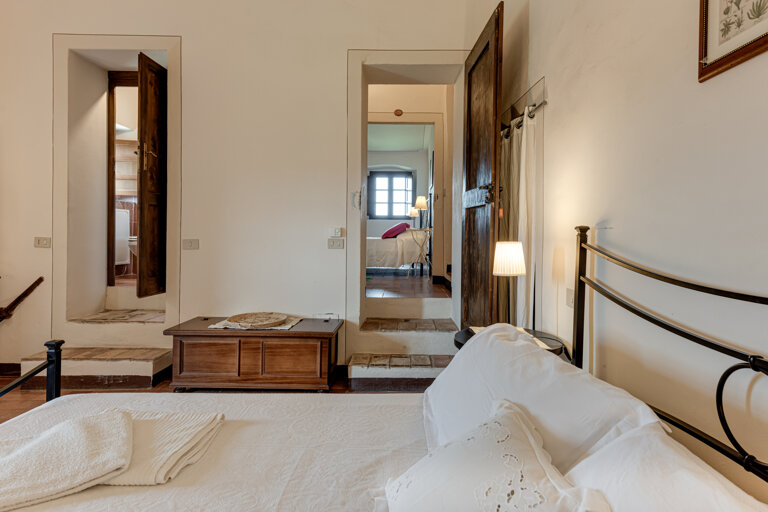
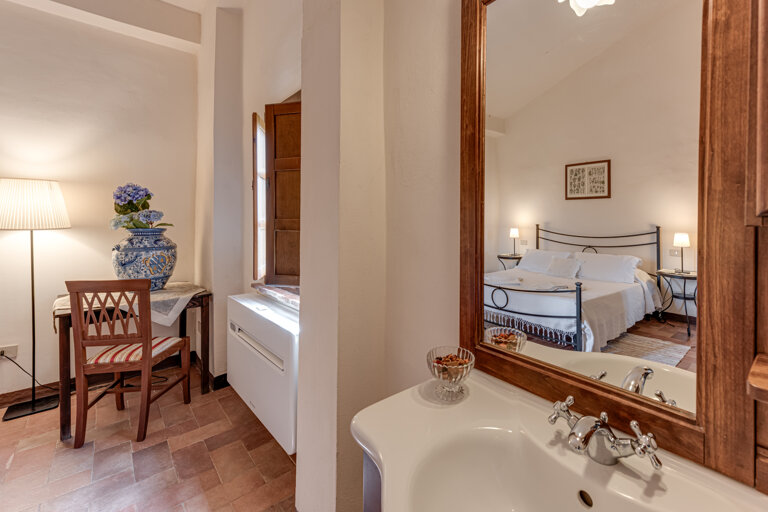
Vite
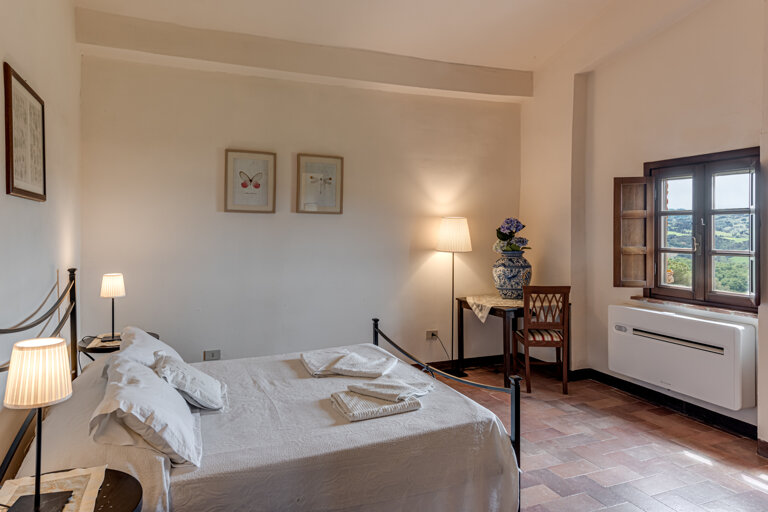
Double-bed room with private shower bathroom.
The room overlooks the vineyard that has always been there, where the farmers planted it. The farmers diversified their crops to support themselves and balance their work throughout the seasons. The grape variety is Sangiovese (the most widespread native variety in Tuscany) and a couple of rows of white Trebbiano. This plantation has vines and olive trees growing close together for mutual support, biodiversity, and soil optimization, reducing pests and creating a self-sufficient ecosystem. This combination, known as ‘vite maritata’ (married vines), is a testament to an ancient, promiscuous, and sustainable form of agriculture, widespread in Italy since the Etruscans and then the Romans, which survived until after World War II, before the advent of industrialized and specialized agriculture. Because what appears to be disorder in nature is actually order.
FIRST FLOOR
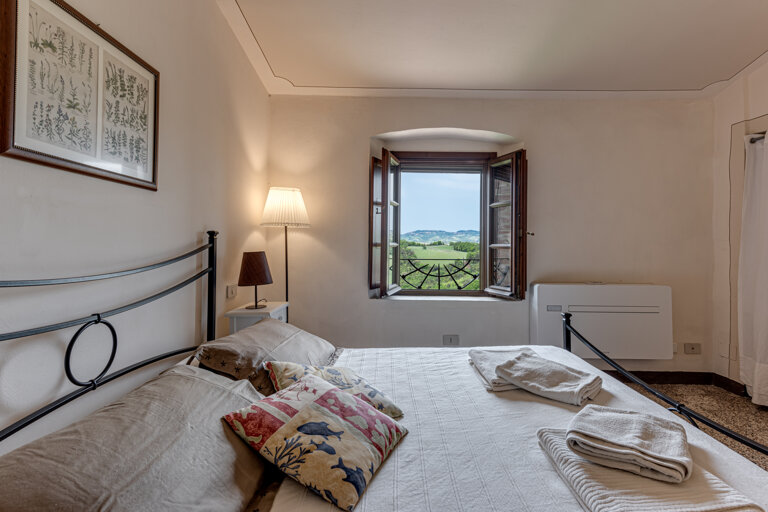
Lavanda
Double-bed room with private shower bathroom.
Lavandula stoechas (commonly known as wild lavender or spike lavender) is characterized by its butterfly-like flowers and grows well in clayey, arid soils, as well as along the coast of Tuscany. We found some specimens growing wild in the large field that can be seen from the room.
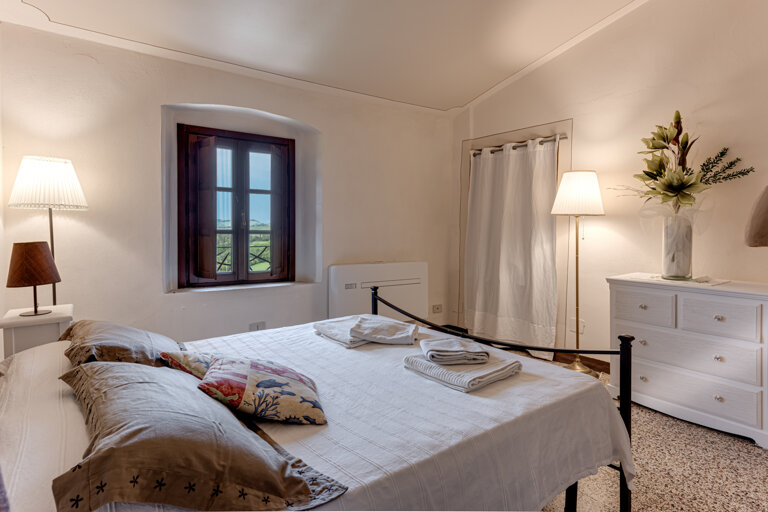
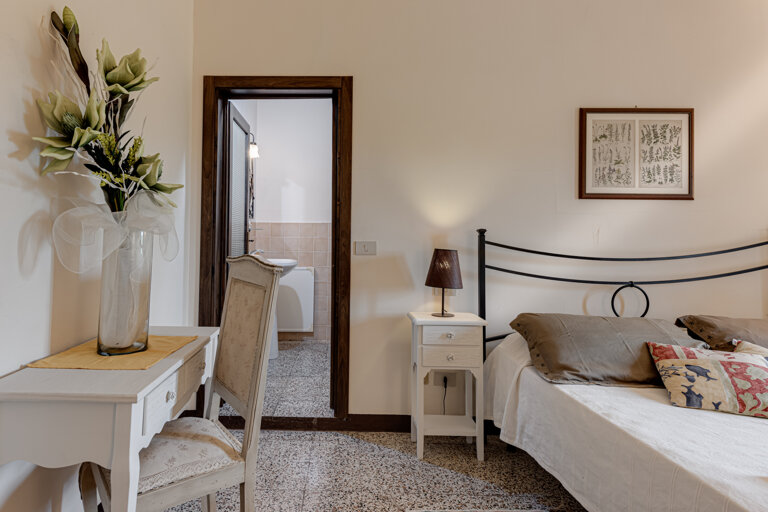
FIRST FLOOR
Civetta
Double-bed room with private shower bathroom.
When we arrived almost 30 years ago, the room provided shelter for an owl that had nested there. The Berignone Forest is a rich ecosystem covering over 2,000 hectares of woodland and Mediterranean scrub, home to various animal species, including several varieties of birds and diurnal birds of prey such as the buzzard, the short-toed eagle (snake eagle), the kestrel, the sparrowhawk, the peregrine falcon, the black kite, and, among the nocturnal birds, the tawny owl, the little owl, and the scops owl, making it an excellent area for observing these predators.